
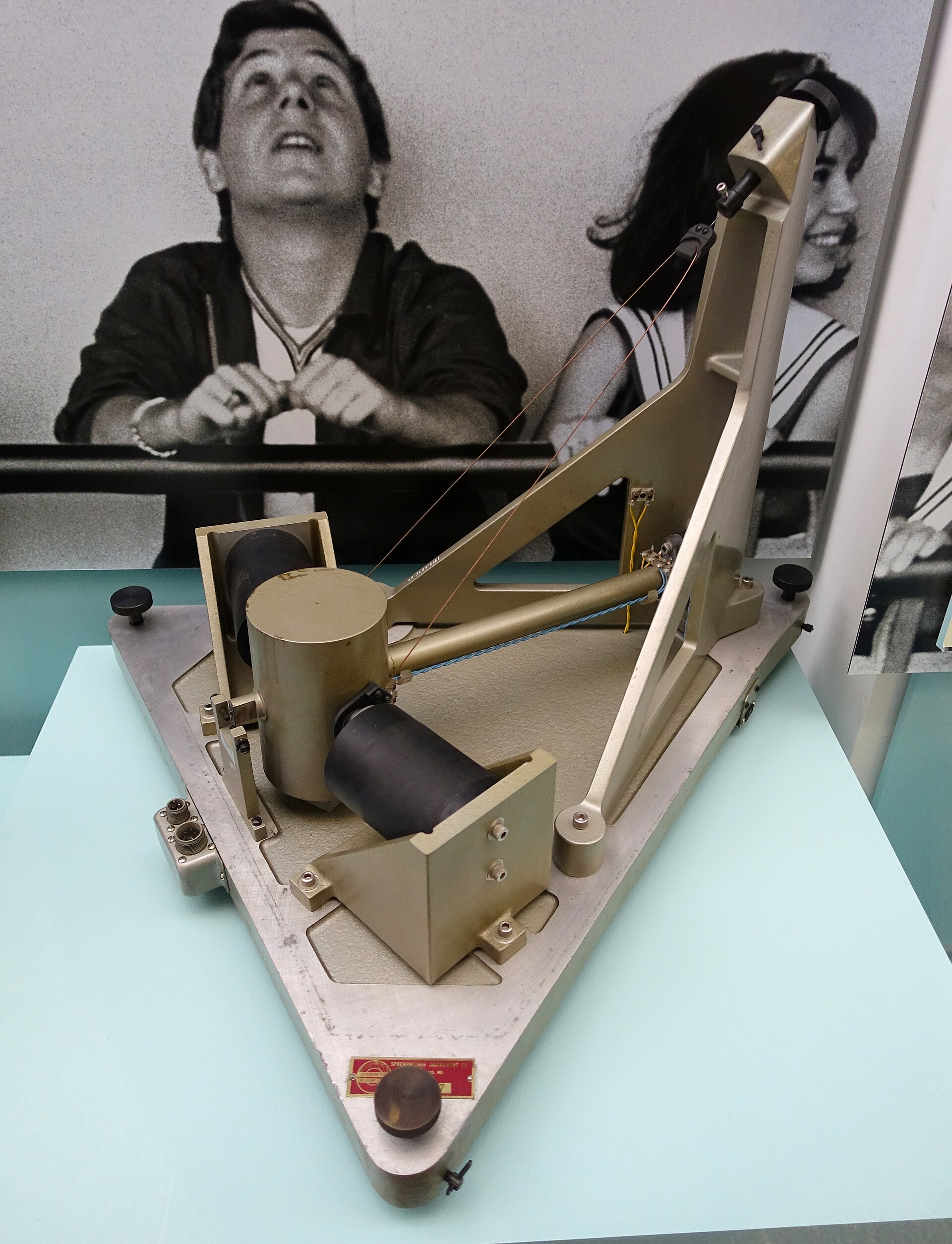
An earthquake announces itself twice. First come the P-waves — fast, weak compressions that race through the earth at six kilometres a second. Behind them, slower and far more destructive, travel the S-waves and surface waves that bring buildings down. Earthquake early warning is the art of exploiting that gap: detect the P-waves near the epicentre, calculate what is coming, and broadcast an alert that outruns the shaking. The prize is measured in seconds — and seconds, it turns out, are worth a great deal.
Japan’s system, the world’s most mature, has issued public alerts since 2007; Mexico City’s network grew from the ashes of its 1985 disaster; the US West Coast now runs ShakeAlert, operated by the US Geological Survey with university partners, delivering warnings to phones across California, Oregon and Washington. The engineering is a race against geology: sensors must detect, locate and characterise a quake within moments, algorithms must guess its magnitude before it finishes rupturing, and alerts must reach millions of devices before the waves do. For cities near the epicentre there may be no warning at all — the blind zone is the system’s honest limitation.
What Seconds Buy
Ten seconds is enough to drop, cover and hold on; to move a surgeon’s scalpel back from a patient; to slow a bullet train — Japanese Shinkansen brake automatically on alerts — and to stop lifts at the nearest floor, open fire-station doors, isolate gas valves and pause factory lines handling dangerous chemicals. Drills in schools convert the alert from a startling noise into a rehearsed reflex. Evaluations summarised by the UNESCO disaster-risk community find the benefits compound: each connected system — transport, hospitals, utilities — multiplies the value of the same few seconds. Read more in our science coverage.
The Frontier: Phones as Sensors
The Last-Mile Problem
An alert calculated in two seconds is worthless if it reaches the phone in twenty. Early warning’s hardest engineering is the last mile: pushing a simultaneous alert to millions of devices strains cellular networks never designed for it, which is why mature systems layer their channels — dedicated broadcast cells that override silent modes, radio and television interrupts, sirens, and machine-to-machine signals to infrastructure that needs no human at all. False alarms are the other tax on trust: each erroneous alert spends public credibility that a real event will need, and operators tune their thresholds in the open, publishing performance after every significant quake. The research frontier is magnitude estimation — the first seconds of a rupturing fault look similar whether the quake stops at magnitude six or continues to eight — and every improvement in that guess widens the map of who can be usefully warned. The seconds are precious; spending them well is a permanent work in progress.
Schools have become the systems’ favourite proving ground, and not only because children are worth protecting. A school is a building full of people who can be drilled, in a region where the drill culture generalises: the child who learns drop-cover-hold carries it home, and the household that hears it at the dinner table becomes a prepared household. Japan’s generations of school drills are credited with casualty figures in 2011 that, for the shaking itself, were a fraction of what the building stock alone would have predicted. Early warning plugged into that culture multiplies it — the alert gives the drill a trigger. The seconds are the same seconds. What a society has rehearsed doing with them is the whole difference.
The newest expansion needs no new hardware. Android phones contain accelerometers, and networks that aggregate millions of them can detect shaking crowdsourced from pockets and nightstands, extending coverage to countries that cannot afford dense seismic networks. The vision forming is of warning as a planetary utility: every sensor, every phone, one race run at light speed against the fastest thing the solid earth can send. The quake always starts first. It no longer always arrives first.