
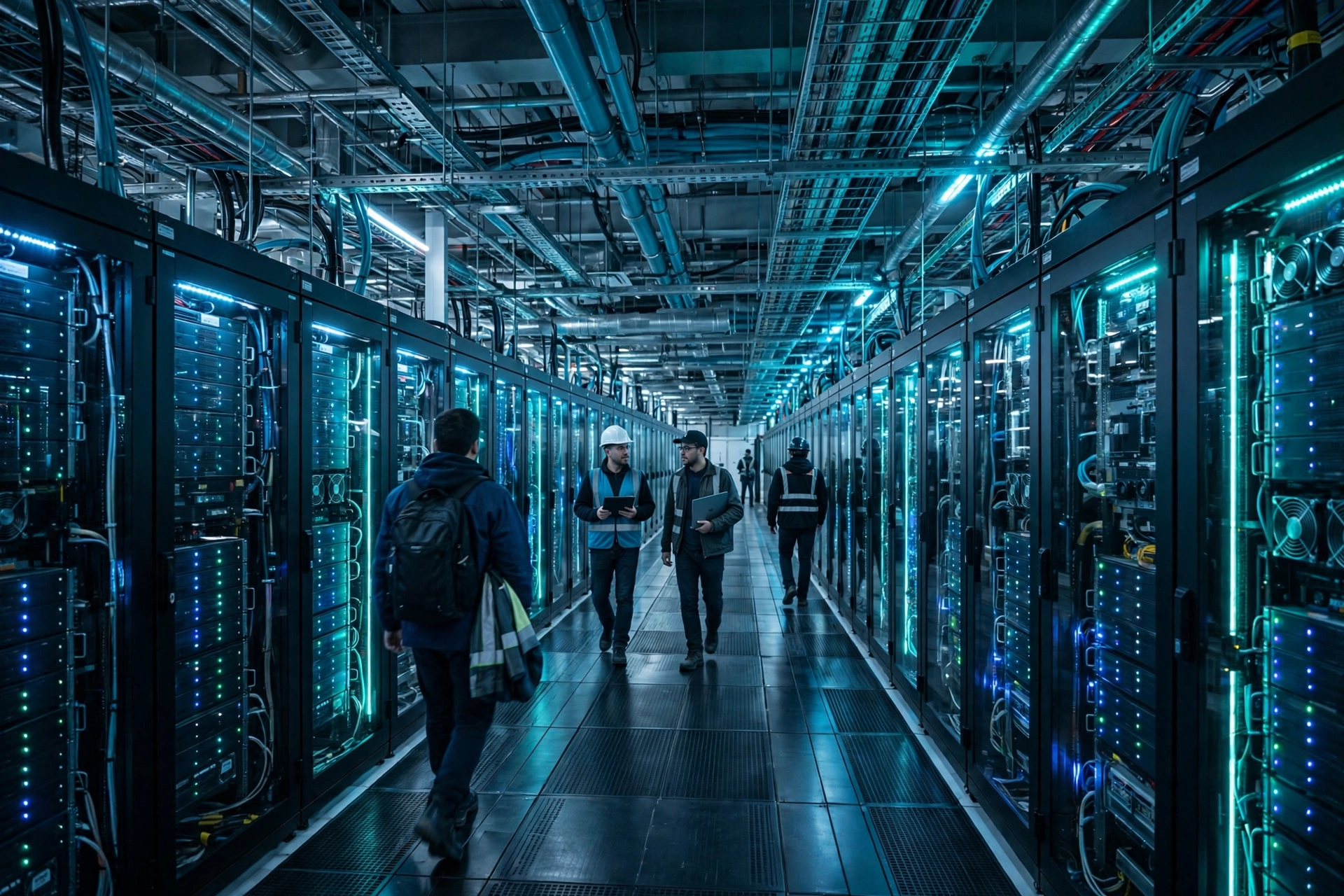
The artificial intelligence boom is being built, quite literally, out of concrete, steel, chips and electricity. Tech giants are committing staggering sums to new data centers, yet a growing chorus of analysts is asking whether the revenue will ever match the outlay. Coverage in The Register this week highlighted forecasts in which infrastructure spending outstrips expected AI revenue, while a separate analysis argued that paying for the planned data centers at prevailing wages would take the equivalent of 250 million jobs, in an economy that has only about 159 million. The headline numbers differ, but the underlying warning is the same: the build-out is running far ahead of proven demand.
Why Everyone Is Building at Once
The logic inside boardrooms is easy to understand. Training and running advanced AI models requires enormous computing power, and the companies that control that power expect to control the market. Nobody wants to be the firm that under-invested if AI becomes the defining platform of the next decade, so rivals keep matching and raising each other’s commitments. Cheap capital, fierce competition and fear of missing out have turned data centers into strategic assets, closer to railways or power grids than to ordinary IT projects. Governments have encouraged the rush, offering land, energy deals and fast-track permits to attract facilities that promise jobs and prestige. The result is a construction wave spanning continents, with each new announcement larger than the last and completion dates stretching years into the future.
Where the Maths Starts to Strain
Problems appear when the timelines are laid side by side. Chips depreciate quickly, often within a few years, while the buildings and power contracts built around them last decades. If customer revenue grows more slowly than expected, owners are left servicing debts on equipment that is already being superseded. Energy is another pressure point: large facilities compete with homes and factories for grid capacity, pushing up prices and forcing expensive upgrades that the public may partly fund. Our explainer on battery and storage management shows how seriously operators now treat power resilience, and storage is becoming as strategic as computing itself. None of this proves the investment is wasted, but it does mean the margin for error is shrinking with every record-breaking announcement.
What This Means for Jobs and Ordinary Users
For workers, the picture is mixed. Construction and engineering roles boom while a campus is being built, but a finished data center employs relatively few permanent staff compared with its cost, which is exactly why the 250 million jobs comparison, explored in depth by PostQuantum, lands so sharply. For users, the effects are subtler. Abundant computing capacity could make AI services cheaper and better, powering everything from translation to medical screening. But if returns disappoint, companies will look for revenue somewhere, through higher subscription prices, tighter free tiers or more aggressive monetisation of attention and data. The same infrastructure story connects directly to daily digital life, much like the way 5G and digital public services are transforming daily life across India: networks built today quietly decide what services cost and who can access them tomorrow.
Boom, Bubble, or Both at Once?
History suggests a nuanced answer. Railways, fibre-optic cables and cloud computing all went through phases of overbuilding that hurt investors yet left behind infrastructure society later used heavily. Excess fibre laid in the dot-com era eventually carried the streaming age. AI data centers could follow the same path: painful corrections for some shareholders, but lasting value in the capacity itself, especially if open models and smaller, more efficient systems spread demand beyond a handful of giants. The risk is timing and concentration. If spending is justified mainly by circular deals among a few large firms, a slowdown would travel fast through chipmakers, builders, energy suppliers and the towns that reorganised around promised facilities.
The Bottom Line for the Digital Economy
The sensible position sits between hype and doom. AI is a real, useful technology, and modern data centers are genuinely needed; the question is pace, not direction. Investors, regulators and communities should ask harder questions about power, water, depreciation and realistic revenue before each new mega-project breaks ground. Users, meanwhile, should enjoy the better services this capacity brings without assuming prices will stay low forever. The maths of the AI build-out does not have to fail, but as this week’s forecasts show, it no longer adds up automatically. From here on, every new data center has to earn its place in the digital economy, not just announce it.
1 thought on “AI Data Center Spending Is Outpacing Revenue, and the Maths Is Getting Harder”